People Love a Good Story
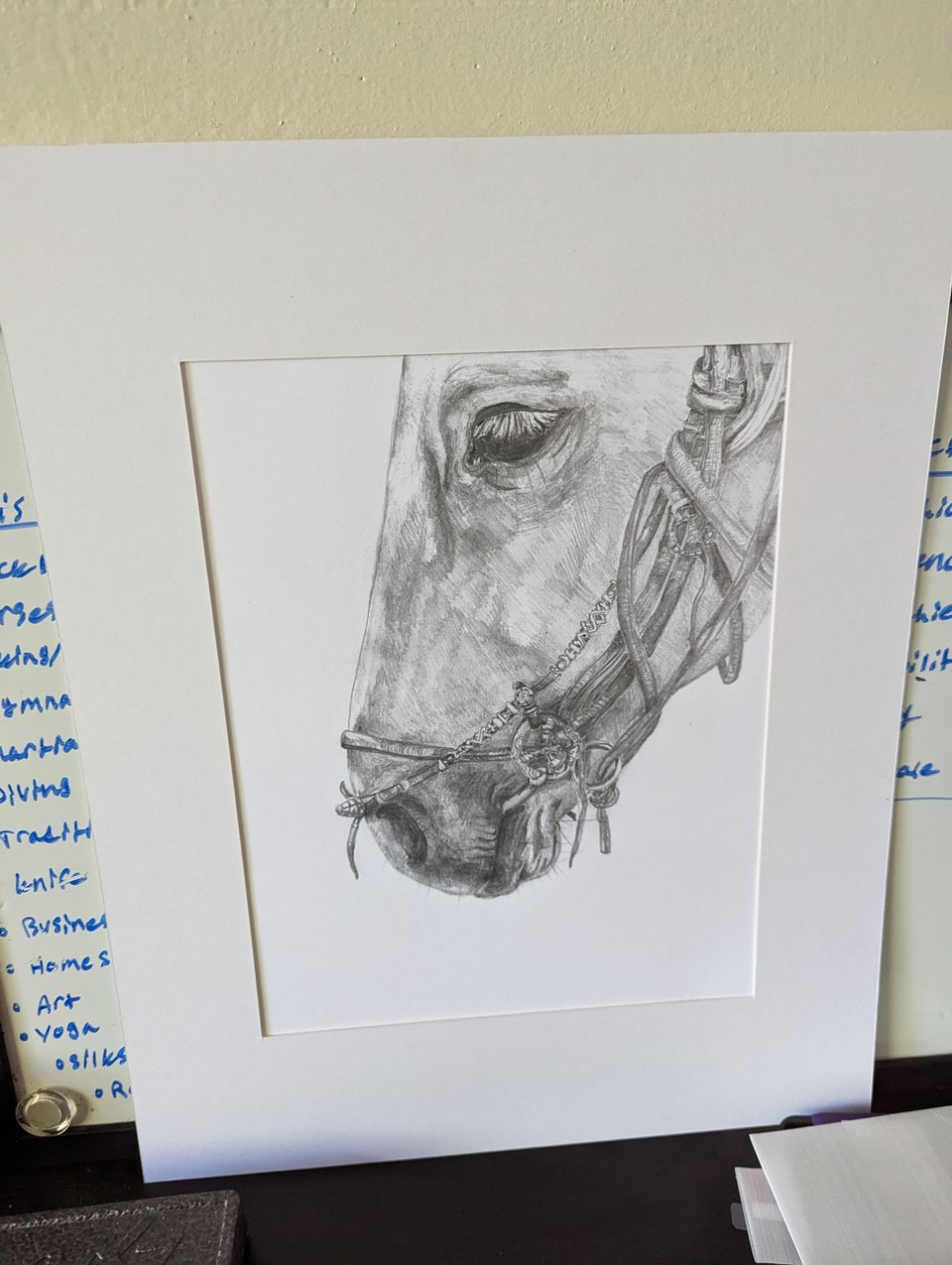
Racing Mongolian horses, pushing to our physical and mental limits, sales, marketing and product pricing. All these seemingly random and disconnected topics are of great personal interest to me and have come together over the last week. This has given me an incredibly fun and insightful brainstorming session that keeps me awake at night. I want to share my experiences and thoughts on story telling, the ideal customer, and product pricing theories.
Setting
I recently went to a presentation by Lena Haug about her participation in the Mongol derby, one of the longest and most challenging horse races in the world. Listening to her talk about the out of control horses, escaping packs of dogs and riding through an artillery firing range, transported me into her experience of pushing herself to her mental and physical limits. By the end of the story I was admiring some of her artwork and asked how much it costs.
She was selling beautiful hand drawn prints of a horses head for $30-35 and all the donations would go to Steppe and Hoof, a charity for nomadic Mongolian families. What I found fascinating was that I chose to pay $100 and still felt like I was under paying. Why? What was influencing me to want to spend/give more money than was being asked?
Let's start with the context that I have never paid for a drawing in my life. I didn't understand why some art costs an arm and a leg, and I am not particularly wealthy. I work 2 part time jobs at different gyms that allow me to make ends meet plus a little extra. I do have an interest in Mongolia because I love their music, specifically throat Singing, and would love to experience their nomadic culture. This was what brought me to the talk in the first place.
Given my lack of substantial wealth and disinterest in art, why is it that I was willing to pay 3x the asking price (on 2 separate occasions)? There's a few reasons that stand out to me:
1.) Her story was equal amounts inspiring, educational and entertaining.
2.) I had an interest in an overarching theme (Mongolian Culture).
3.) She developed credibility and a genuine connection with her audience.
4.) The money would go to a worthy cause.
Inspiring, Educational and Entertaining
I came across a saying from Vinh Giang, "...effective communication is 33% education, 33% entertainment and 33% inspiration". Makes sense, most people like to hear about new things in an engaging way that inspires them. I was engaged, loved every moment and rode the emotional ups and downs of the Mongolian Steppe through her story. That is an experience worth remembering, and what better way than a beautifully hand drawn picture of a horse, the center piece of the story and Mongolian Culture?
Established Interest in Overarching Theme
It certainly helps that I was already in awe of the incredible vocal techniques and instrumental equestrian mimicry of Mongolian music. Huun Huur Tu has an amazing live performance from UC Berkeley that perfectly exemplifies their unique style of music, steeped in culture and centered around the horse. This is a pretty unique interest, very few people find it palatable, but from the moment I heard it... I knew it was weird. It has become my favorite genre.
This being the case, every detail about the nomadic families, the Mongolian landscape and the historical significance of the race fascinated me. The fact that someone else had such a life changing experience in a relatively obscure country that carries so much significance to me made me inherently trust her, and since the charity directly benefitted these nomadic families I knew my money would make a meaningful impact.
Credibility and Genuine Connections
"This lady is fucking cool". I can't read minds, but I'm pretty sure that by the end of the story everyone shared a similar thought. The difficulty of the experience, her sheer perseverance and genuine respect for the people and their horses established her credibility as an exceptional human being. I also felt that I could relate to her story. I respect the growth that comes from being pushed to our physical and mental limits. I understand the importance of being immersed whole heartedly in an experience, and I want to visit Mongolia. Her story perfectly aligned with my interests.
At one point she talks about stopping at a horse station, which is basically the yurt of a nomadic family, and having to choose between continuing on to the next station or relaxing and getting to know the family. It was a point at the race where she was utterly exhausted and had realized that anyone is lucky to simply finish the race and that your place has approximately no importance whatsoever. At this point, winning for her was not about getting first place, but rather sharing food and drinks with friends and the family, getting to know them and enjoying each other's company.
This really struck a note with me because that is exactly what I value and why most of the time I am not motivated by competition. I like to think that I value the little details of life; helping others, learning from others and sharing of food and drinks. For someone who shares the same values and has established themselves as a genuinely honest, credible person, I would do whatever I can to help them.
The Money Would Go To a Worthy Cause
Whether that cause was supporting her next adventure, helping the charity for nomadic families or just making her life a little easier and more enjoyable, I believed that the money I gave her would be put to good use. Money is a tool, if I have enough to give some away so someone else can put it to what I deem to be good use then by all means I will. I could practically guarantee I was NOT giving it to someone who would spend it on an addiction (gambling, drugs, etc) or spend it on anything frivolous.
A Particular Type of Customer
I was the type of customer who was ready and willing to buy, plus had the funds to do so. Many times the price is only one factor people consider when buying, and a low price can actually turn people away. I respect the value of my money and $30 is not incredibly significant. I won't waste it, but I will happily part ways with $30, about 1.5 hours of my time, for something I deem has at least that much value. If I am happily willing to do so, there are certainly others who will as well. $100 is a little less comfortable. $200 would make me think hard. $500 is a big decision. $1000+ has to be something that will have a direct and significant impact on my life.
A higher price tag conveys higher value. I can only speak to my personal experience as a consumer, but I know that I will value something that has a higher price tag more than something with a lower price tag. I also feel like it's more scarce. Almost anyone who likes the picture will pay $30 for it. Far less people would pay $100 for it and only a select few would even consider paying $200-500+. But let's do some quick math.
Example time
We have 2 events: event 1 sells the prints for $30 and event 2 sells the prints for $240 (just to make the math easy). Assuming all other factors are the same, we would need 8 clients to buy prints from event 1 to match 1 client from event 2.
Now let's assume you only bring 3 prints to both events. Your revenue at event 1 maxes out at $90, while revenues from event 2 max out at $720. Keep in mind that the right client will absolutely pay a premium for the print due to the reasons listed above, especially if they feel like they're getting a more valuable product and something that few other people have (scarcity). Also I would bet that both events would sell out or that event 2 might be more likely to sell out as long as someone buys the first print. Fear of missing out (FOMO) is a real thing and if you're on the fence about the price, seeing them being bought up adds an extra sense of urgency that encourages a sale.
I went to 2 of her presentations and at the 2nd talk, after she was done and everyone was in the lobby, I was considering buying another print. I saw people looking at them and knew they were going to start disappearing and waited to see if any would be left, but sure enough they were all gone by the time I got there. So I just gave her the $100 anyways and moved on (which speaks to the power of believing in the person's message. Value can be delivered even without a physical product).
Of course there will be the people who scoff at a high price tag, claim it to be ridiculous, selfish and greedy. However, I would ask the question: are those the kinds of people you want to associate with? Nobody is forcing anybody to buy anything so if they are complaining about the price 1.) They don't care enough 2.) They're willing to spend their energy bemoaning their circumstances and bringing others down 3.) They're not appreciating the opportunity to simply admire the work and are in fact being selfish and greedy by believing they deserve a lower price.
This particular story conveys a superior value because of it's scarcity, only a small group of top level riders in the world have participated in this event so where else could I go to hear such a story? This combined with being educational, inspirational and entertaining, my personal interest in the overarching theme of Mongolia, the credibility and connection Lena established and my belief in the cause being worthy set the stage for paying a premium price for what I see as a premium product.
Thank you for indulging in my thoughts.
All the best,
Aspen